The “Toxic Lung Sludge” Theory Behind a Viral Vicks VapoRub Trick. The Hidden SP-D Protein Connection and How to Get Rid of Mucus in Lungs
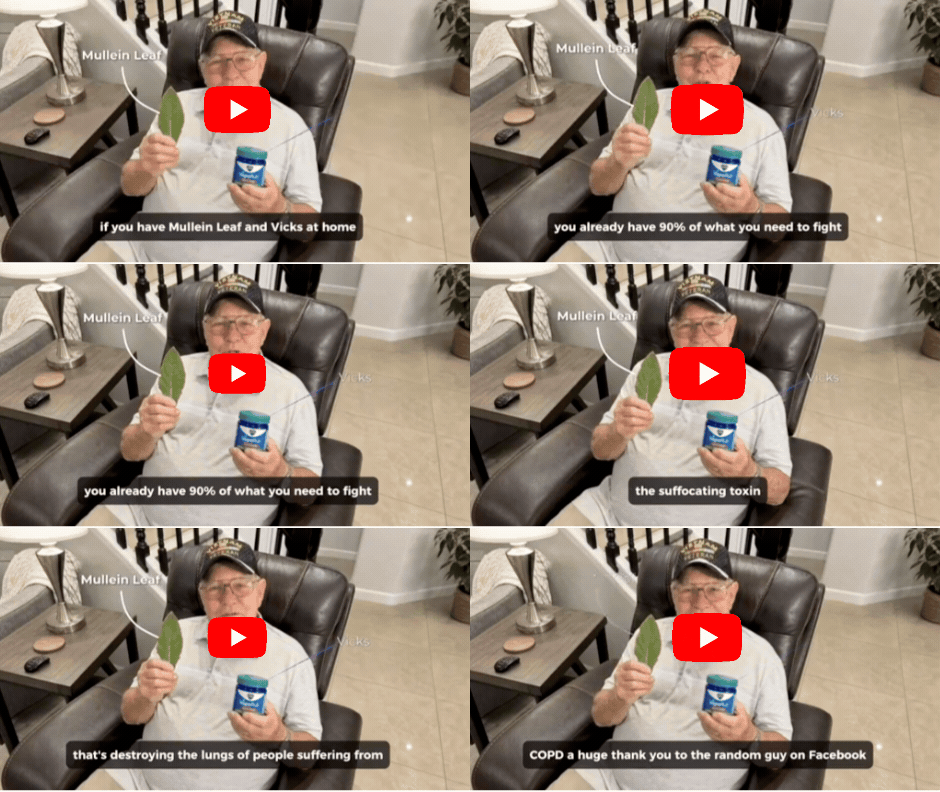
For millions of Americans, breathing is no longer something they can take for granted.
Walking up a flight of stairs can leave them struggling to catch their breath.
Simple activities like getting dressed, carrying groceries, or walking to the mailbox can become exhausting.
And sometimes, even resting does not bring the relief they hoped for.
For people living with chronic obstructive pulmonary disease, or COPD, these experiences can be frightening.
But what exactly is happening inside the lungs when breathing becomes so difficult?
A respiratory-health presentation circulating online proposes an unusual explanation involving a substance it calls “Toxic Lung Sludge.”
The presentation also introduces a natural lung protein known as Surfactant Protein D, or SPD.
Its central argument is that this protein may play an important role in the lungs' natural defense processes.
THE QUESTION BEHIND THE VICKS TRICK
Could a compound associated with eucalyptus influence natural processes involved in lung defense? The presentation suggests a connection between eucalyptol and SPD, but its claims that this process reverses COPD or restores damaged lungs have not been established by reliable clinical evidence.
To understand the theory, it helps to look at what actually happens inside the respiratory system.
What Happens Inside the Lungs When Breathing Becomes Difficult?
Imagine your lungs as a complex network of branching airways ending in millions of tiny air sacs called alveoli.
These air sacs help oxygen enter the bloodstream while allowing carbon dioxide to leave the body.
In healthy lungs, air moves through this system relatively easily.
But COPD can interfere with that process.
Chronic inflammation, excess mucus, narrowing of the airways, and damage to the alveoli can all contribute to restricted airflow.
Over time, these changes may make everyday activities increasingly difficult.
The viral presentation simplifies these complex processes by describing a buildup of thick material inside the lungs.
It refers to this proposed buildup as:
“TOXIC LUNG SLUDGE.”
However, this term is not a recognized medical diagnosis or a single substance known to cause COPD.
Although mucus accumulation can contribute to respiratory symptoms, COPD also involves structural changes that cannot simply be washed or dissolved away.
But the presentation argues that there may be another piece of the puzzle.
And this is where the protein SPD enters the story.
The SPD Protein: A Little-Known Part of the Lungs' Natural Defense System
Surfactant Protein D, commonly called SPD or SP-D, is a real protein found in the respiratory system.
It plays a role in the lungs' innate immune defenses, helping the body recognize and respond to certain microorganisms and inhaled particles.
Researchers have studied its relationship with respiratory inflammation and lung disease.
The viral presentation takes this scientific concept further.
It claims that reduced SPD production is a major reason the lungs lose their ability to clear harmful material and recover from damage.
It also suggests that restoring SPD production could trigger a natural lung-restoration process.
There is an important distinction, however.
SPD is biologically relevant to lung health, but SPD deficiency has not been established as the universal root cause of COPD.
Nor has increasing SPD been proven to reverse emphysema or restore permanently damaged lung tissue.
WHY THE SPD CONNECTION ATTRACTS ATTENTION
Rather than focusing only on breathing symptoms, the presentation introduces a protein involved in the lungs' natural defenses. The unanswered question is whether influencing that protein can meaningfully improve outcomes for people with COPD.
And that question leads to the most recognizable part of the presentation.
The Vicks VapoRub connection.
The Vicks VapoRub Trick: Why Eucalyptol Became the Central Clue
For generations, many households have kept a familiar jar of Vicks VapoRub in their medicine cabinets.
Its characteristic aroma is associated with ingredients such as menthol, camphor, and eucalyptus oil.
One compound found in eucalyptus oil is called eucalyptol, also known as 1,8-cineole.
Eucalyptol has been investigated for several biological properties, including potential effects on inflammation and respiratory symptoms.
The presentation uses this compound as the starting point for its proposed lung-restoration mechanism.
It claims that a concentrated eucalyptol formula can stimulate the body's natural production of SPD.
According to its narrative, this would allow the lungs to begin clearing accumulated material and improving respiratory function.
But the presentation does not establish that applying Vicks VapoRub, taking eucalyptol, or using its advertised spray can produce those outcomes in COPD patients.
This sequence summarizes the advertising theory rather than a clinically proven treatment pathway.
And eucalyptol is only one of the ingredients discussed in the presentation.
The Four-Phase Lung Restoration Theory
The presentation describes a formula combining several compounds, each assigned a different role in its proposed respiratory mechanism.
First: Eucalyptol.
Described as the ingredient intended to stimulate SPD production and initiate the proposed lung-defense response.
Second: Methylglyoxal.
A compound associated with certain types of honey, presented as a way to dissolve the alleged toxic buildup.
Third: Bromelain.
An enzyme found in pineapple, described as helping clear mucus and open respiratory pathways.
Fourth: Quercetin.
A plant-derived flavonoid presented as supporting inflammation control and tissue recovery.
The presentation later introduces Coenzyme Q10 (CoQ10) as an additional ingredient associated with cellular energy processes.
Although these substances have been studied in different biological contexts, the presentation does not provide sufficient evidence that this specific combination reverses COPD or replaces established medical treatments.
FIVE INGREDIENTS, ONE IMPORTANT QUESTION
The presentation combines eucalyptol, methylglyoxal, bromelain, quercetin, and CoQ10 into a proposed respiratory-health formula. But whether that combination can safely and effectively treat COPD requires rigorous human clinical trials, not just a theoretical explanation.
What the Full Presentation Reveals
The video goes beyond the Vicks connection to introduce a commercial product called Breathy Zen.
It describes an oral spray intended to deliver the proposed combination of respiratory-health compounds.
It also features dramatic testimonials and claims about improved breathing, reduced dependence on inhalers, and restoration of lung function.
Those testimonials and endorsements have not been independently verified here.
More importantly, no supplement or spray should be considered a substitute for prescribed COPD treatment based on these claims.
Evidence-based COPD care may include inhaled medications, smoking cessation, pulmonary rehabilitation, vaccinations, and oxygen therapy when medically indicated.
Stopping prescribed oxygen or inhalers without medical supervision can be dangerous.
THE FULL PRESENTATION EXPLAINS THE PROPOSED SPD CONNECTION
The video introduces the “Toxic Lung Sludge” theory, explains how its creators connect SPD to respiratory health, and describes why eucalyptol and other compounds were selected for the advertised formula.
Watch the full presentation to understand the claims being made — while keeping in mind that the proposed COPD reversal mechanism is not an established medical treatment.